
Australian Antarctic Program
Location
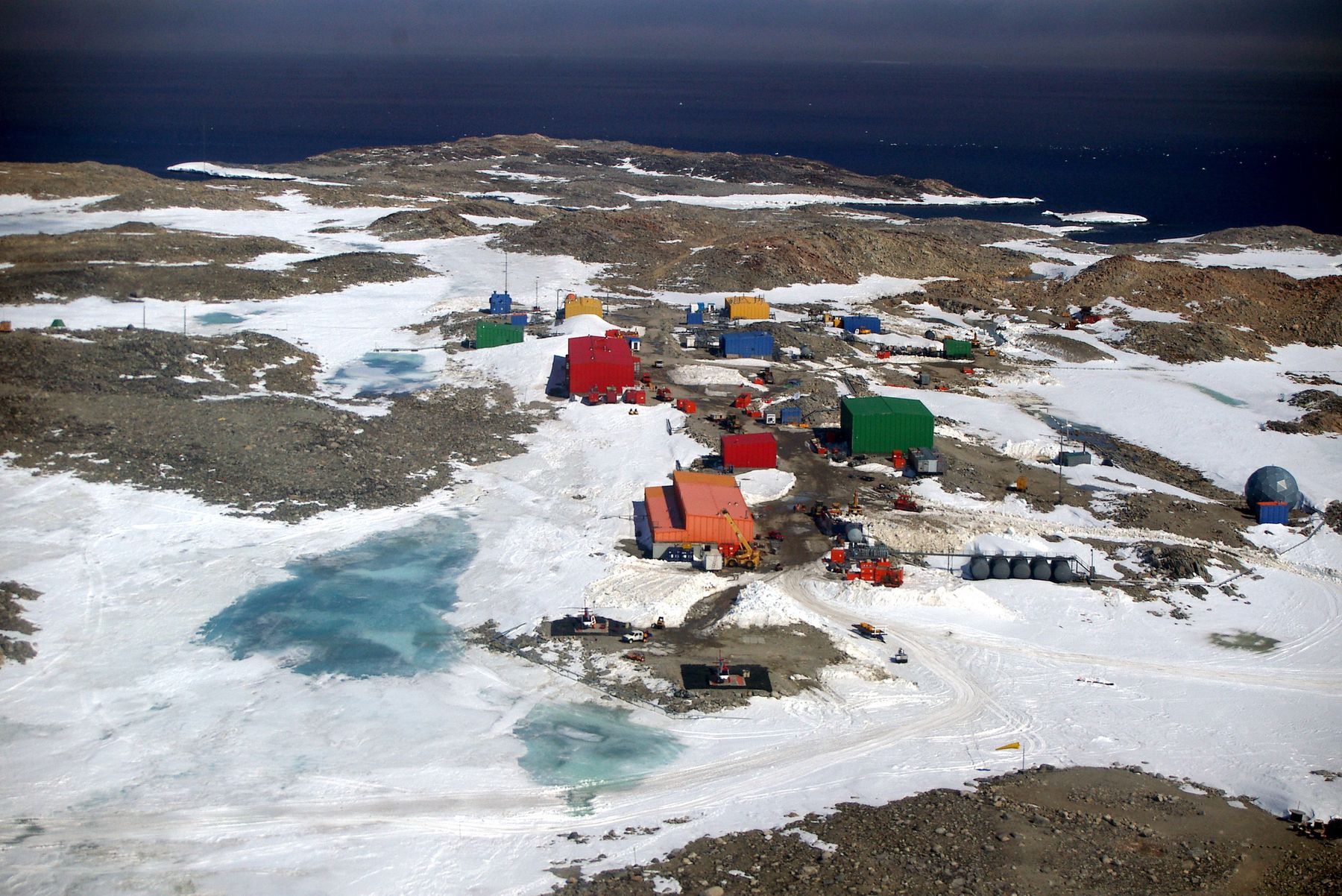
Situated in an area of the low, rocky Windmill Islands and peninsulas, Casey is perched on the edge of the massive Antarctic ice cap.
Research
The station was the site for a world-first underwater ocean acidification experiment in Antarctica to examine ocean acidification on changes to polar seafloor communities. More recently, Casey station was used as a base to collect data using airborne geophysical instruments to study the bedrock geology and structure of the East Antarctic ice sheet, and its glaciological processes. Scientists continue to work at Casey to develop an integrated strategy to assess and clean up contaminated soils that are a legacy of the early waste disposal practices in Antarctica. Finding the right technologies to remediate contamination will inform appropriate remediation techniques at other known contaminated Antarctic occupied and abandoned sites. Another research focus in the Casey region involves monitoring and assessing Antarctic breeding seabirds to determine population status and trends, and to identify current and emerging threats. Seabirds are useful indicators of change in the Southern Ocean because of their links to terrestrial and marine environments where they breed and forage. Data from this project feeds into the Commission for the Conservation of Antarctic Marine Living Resources (CCAMLR) ecosystem management approach of the Southern Ocean and will help to ensure that Antarctic fisheries practices remain sustainable for wildlife.
Biodiversity
With more than 50 islands in the group, the Windmill Islands are home to tens of thousands of birds. Casey is also the site of large moss beds, and is recognised as among the most significant vegetated areas on the continent.
Polardex assistant
Sign in to ask about polar stations, vessels, aircraft and planned expeditions.
Sign in